How it works The platform Outcomes
Home Services Airbus A320 Boeing 737 MAX Predictive AI Why Simura Case StudiesSpare Parts Request a demo
Predictive Maintenance · FSTD

Know which part fails next. Before the sim goes down.

Simura reads your simulator's full repair history and turns it into a six-month failure forecast - then our engineering team sources the spare parts before they're needed.
The cost of reacting

A grounded simulator is lost training, not just a repair bill.

Most FSTD maintenance is reactive: a component fails, the sim goes AOG, and the part takes weeks to arrive. The failure signals were usually in the history all along.

Unplanned downtime

Critical failures ground the device mid-programme, with knock-on effects across the training schedule.

Long lead times

Legacy simulator components can take weeks to source once a fault is confirmed - time the device spends offline.

Patch, don't fix

Resets and cleans clear the symptom but leave the root cause, so the same fault keeps returning.

How it works

Four steps from raw history to parts on the shelf.

The same process runs on any simulator's maintenance record. It ends not with a chart, but with the physical spare part staged before you need it.

1

Sync with your repair team's records

We connect securely to your maintenance ticketing system - the log your engineers already fill in - and continuously synchronise the complete servicing history, ticket by ticket.

  • Works with your existing CMMS / defect log
  • Every ticket, effect rating and part event captured
  • Kept current as your team logs new work
2

See where the issues really are

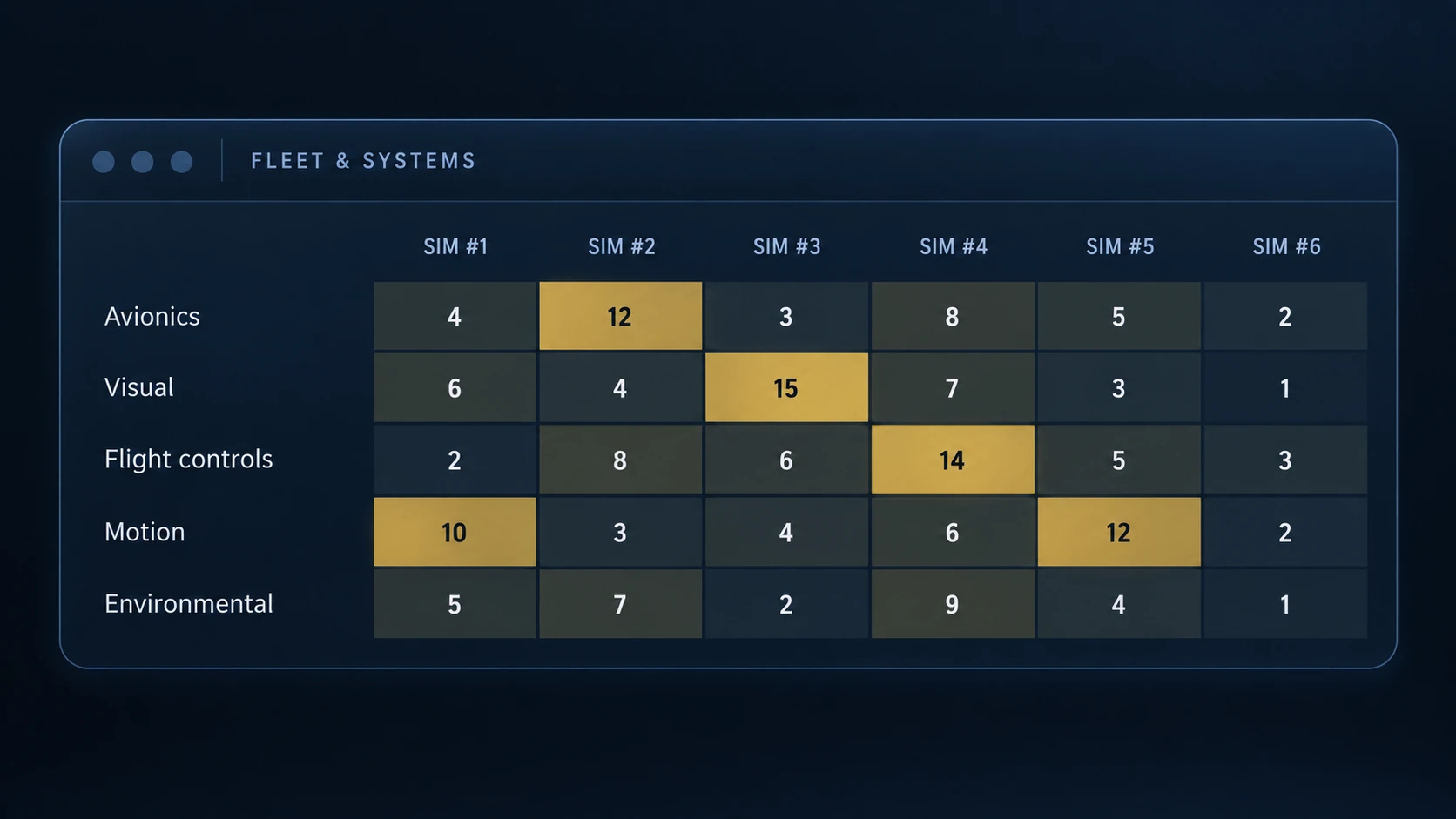
An interactive console turns years of tickets into a clear picture: which device struggles with which system, how long faults take to close, and where parts get stuck in sourcing.

  • Fleet heatmap by device and aircraft system
  • Resolution and part-sourcing lead times
  • Filter by device, year and severity
3

Forecast the next failures

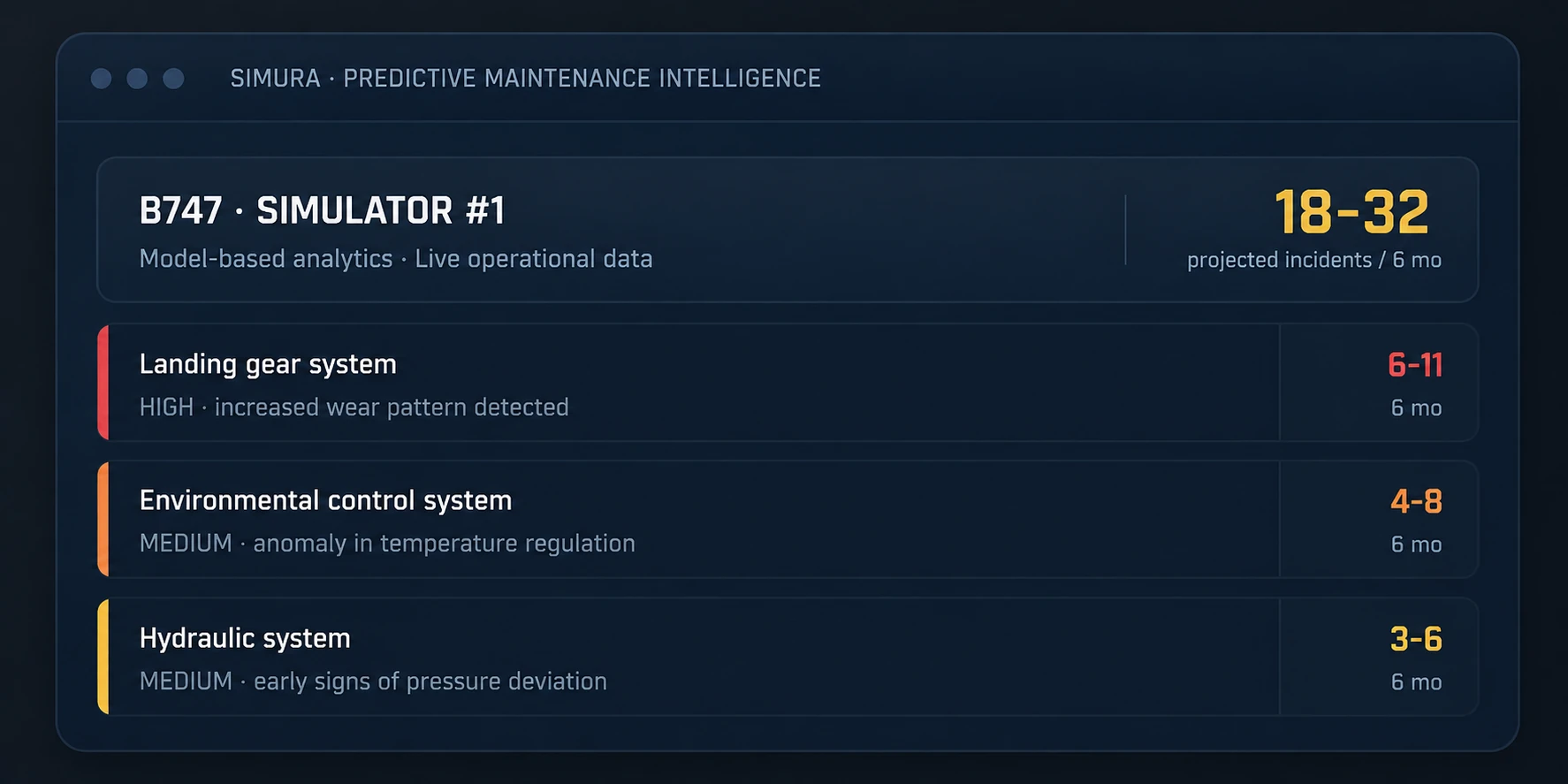
The model ranks every system by how often it fails, how recently the rate has changed, how critical the outcomes are, and the direction of travel - then projects the next six months for each device.

  • Per-device six-month failure forecast
  • Ranked by frequency, recency, severity and trend
  • Flags systems being patched rather than fixed
4

We provision the spare parts

This is where Simura is different from a dashboard. Our engineering team turns the forecast into a provisioning plan and sources the parts - so the component is on your shelf before the failure, not weeks after it.

  • A ranked, actionable spares list per device
  • Sourced and staged ahead of demand
  • Root-cause repairs, not repeat resets
The platform

One console. The forecast up front, the evidence one click behind it.

Every projection is traceable to the tickets behind it - so your engineers can trust the recommendation, not just read it.

Why it matters

Fewer surprises. Shorter lead times. Higher availability.

Plan ahead

Provision before failure

Parts are ordered against a forecast, not a breakdown - cutting the wait from weeks to zero when the fault hits.

Fix once

Target the root cause

The model surfaces systems that keep being reset rather than repaired, so the recurring fault is finally closed out.

Stay flying

Protect training time

Fewer unplanned AOG events means the device stays available for the programme it was built for.

Get started

See it run on your simulator's history.

Send us a little about your fleet and we'll walk you through a forecast built on your own maintenance data.